About
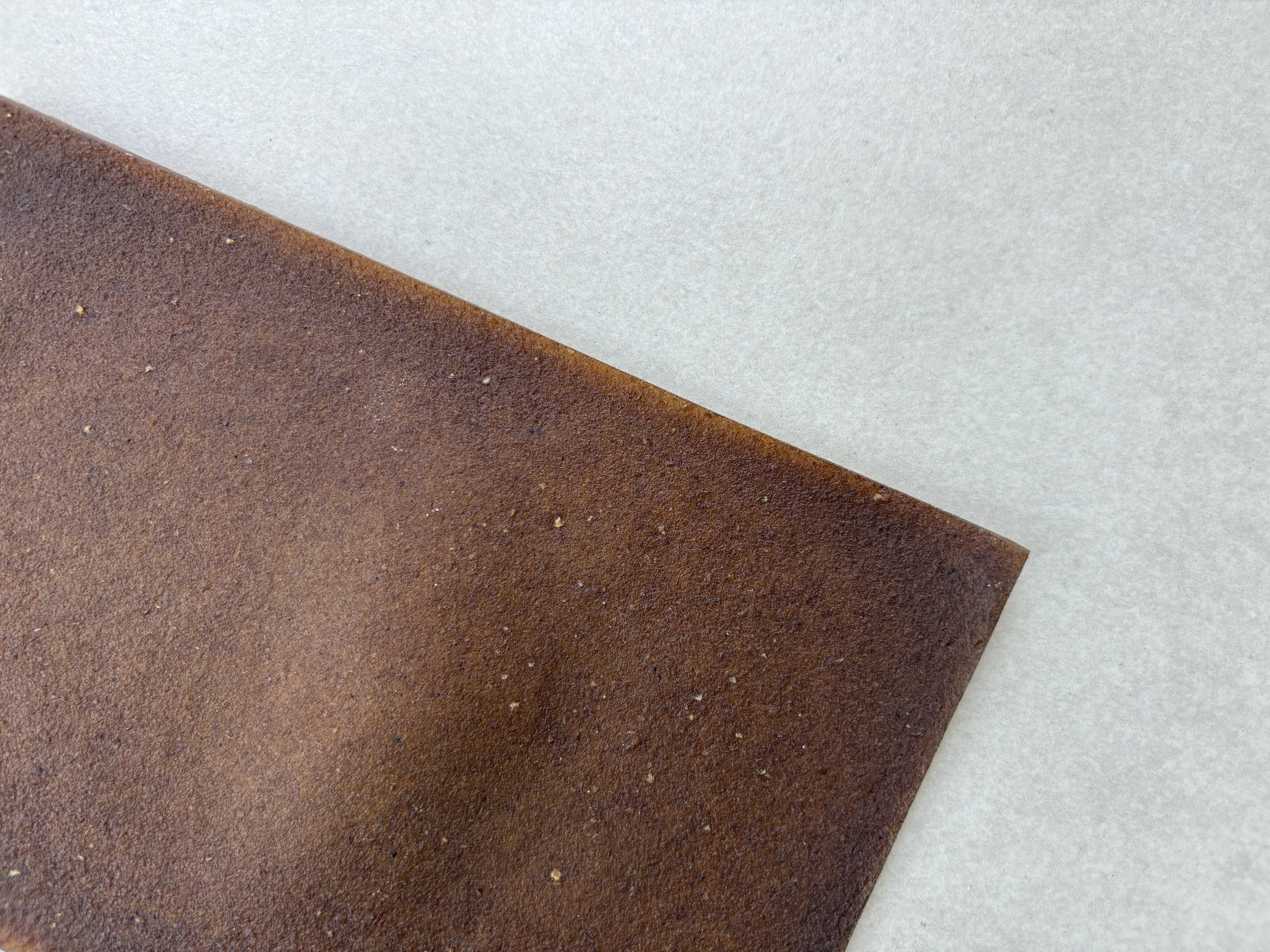
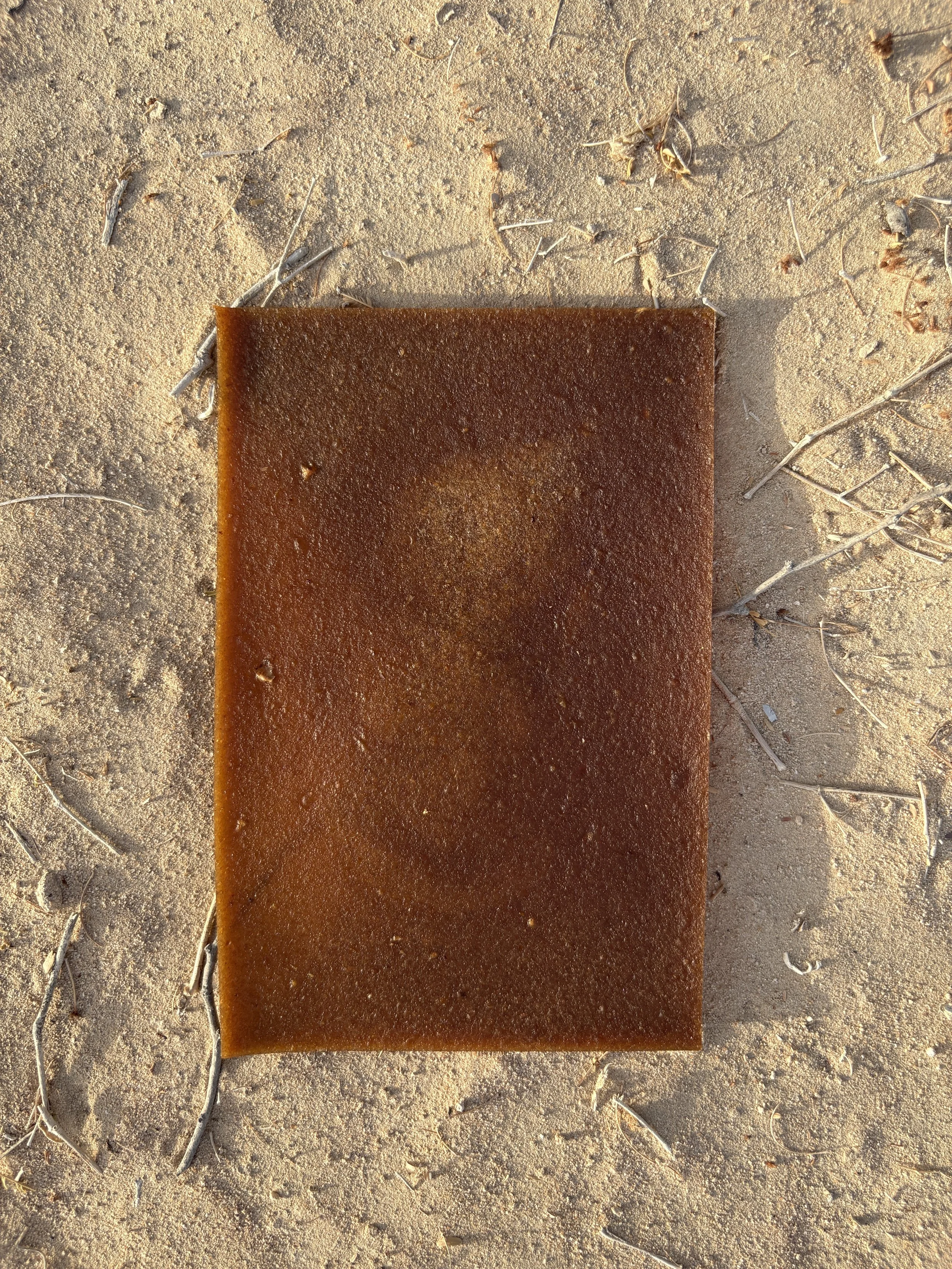
DateSkyn is a plant-based biomaterial created from date fruit processing by-products in the UAE, specifically using date pulp and date press cake that would otherwise be discarded in processes such as juicing. Dates have been cultivated in the region for thousands of years as symbols of hospitality and resilience. This innovation transforms local waste streams into a flexible leather-like material that replaces animal leather and petroleum-based synthetics.
The material supports the UAE's circular economy goals by utilising the 1 million tonnes of date waste discarded annually as a valuable resource. DateSkyn has a leather-like flexibility and durability, making it suitable for fashion accessories, garments and interior applications. As a biodegradable material that returns nutrients to soil at end-of-life, it represents a closed-loop approach to material innovation that strengthens connections between local resources, cultural heritage, and environmental regeneration in the UAE.
A flexible, biodegradable biomaterial transforming the UAE's date waste into a sustainable alternative to leather and synthetics.
Applications
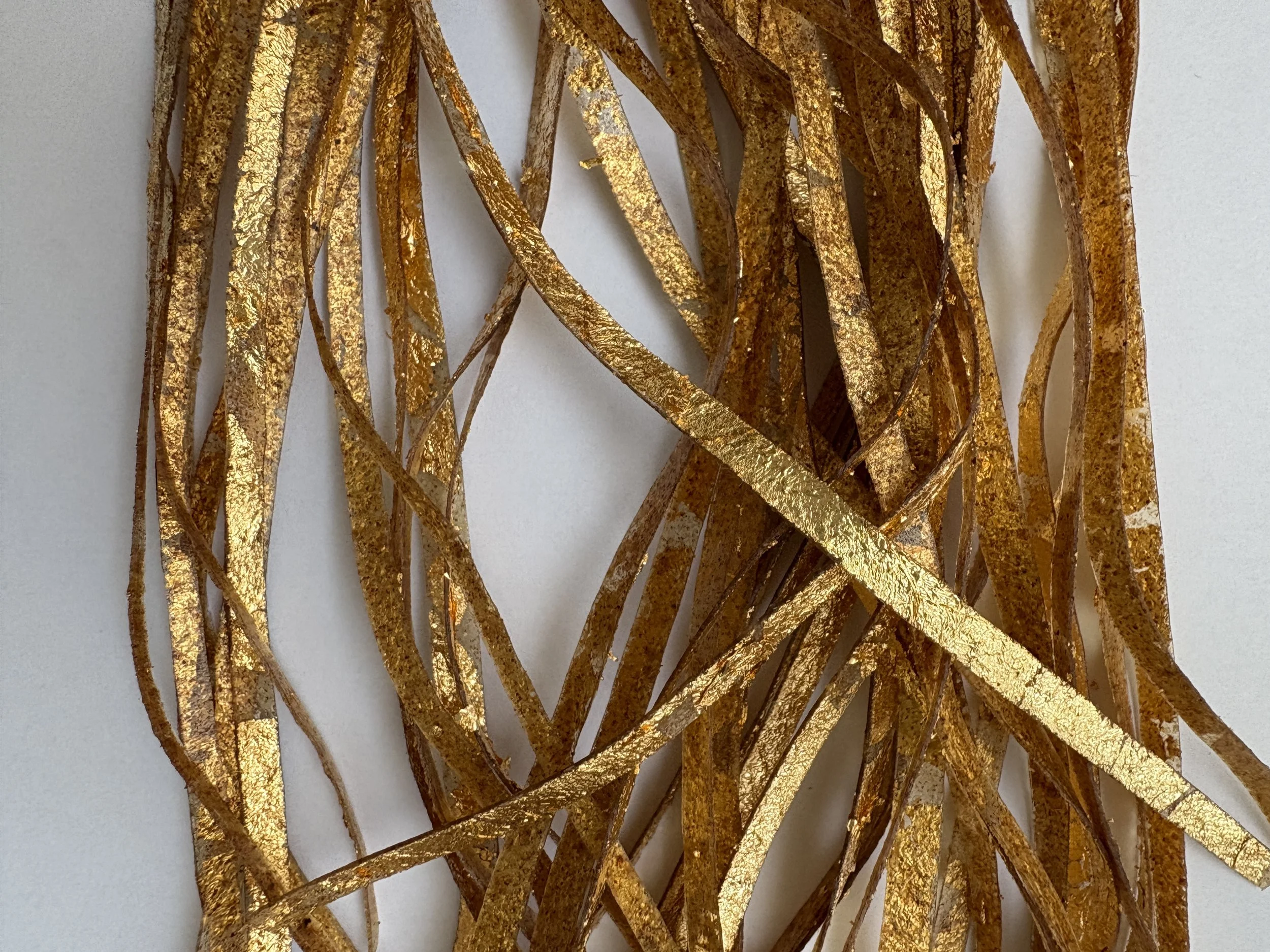
As part of its development, DateSkyn has been applied in a contemporary adaptation of the Emirati craft Talli. This craft integration serves both as a method of material testing and as a way to honour and recontextualise local heritage practices within circular fashion systems. What emerged from this research was the Bio-Khose, a biomaterial version of the gold or silver khose used within the Talli braid.
The Bio-Khose was co-developed with two Emirati artisans from Khor Fakkan to address the need for an alternative to the plastic khose they were using. Working with the artisans revealed how craft practice fosters sustainable knowledge through embodied ways of knowing, community connection, and place-based knowledge. These initial material experiments have uncovered the importance of traditional knowledge in guiding innovation. DateSkyn and Talli together show how local waste streams can be transformed through heritage practices, creating place-based solutions that serve both environmental and cultural regeneration.